"Digital twin" is used for everything from a CAD viewer to a closed-loop control system. Every project we build renders in real-time 3D, so the visuals do not separate them. What separates them is which questions the state machine underneath can answer.
Generation 1 — Digital model
What does it look like, and where is everything? Faithful structure from authoritative data. Our Universe and Human Body explorers sit here: real NASA maps, IAU orientation, a 1,300-part anatomical atlas. Facts are known and fixed; there is no live state.
Generation 2 — Digital shadow
Where is the system right now, given what the sensors see? Observations flow one way into the model, and state is estimated with error bounds. The Fieldwork navigation lab localises a vehicle from camera images — and refuses a fix it cannot support.
Generation 3 — Digital twin
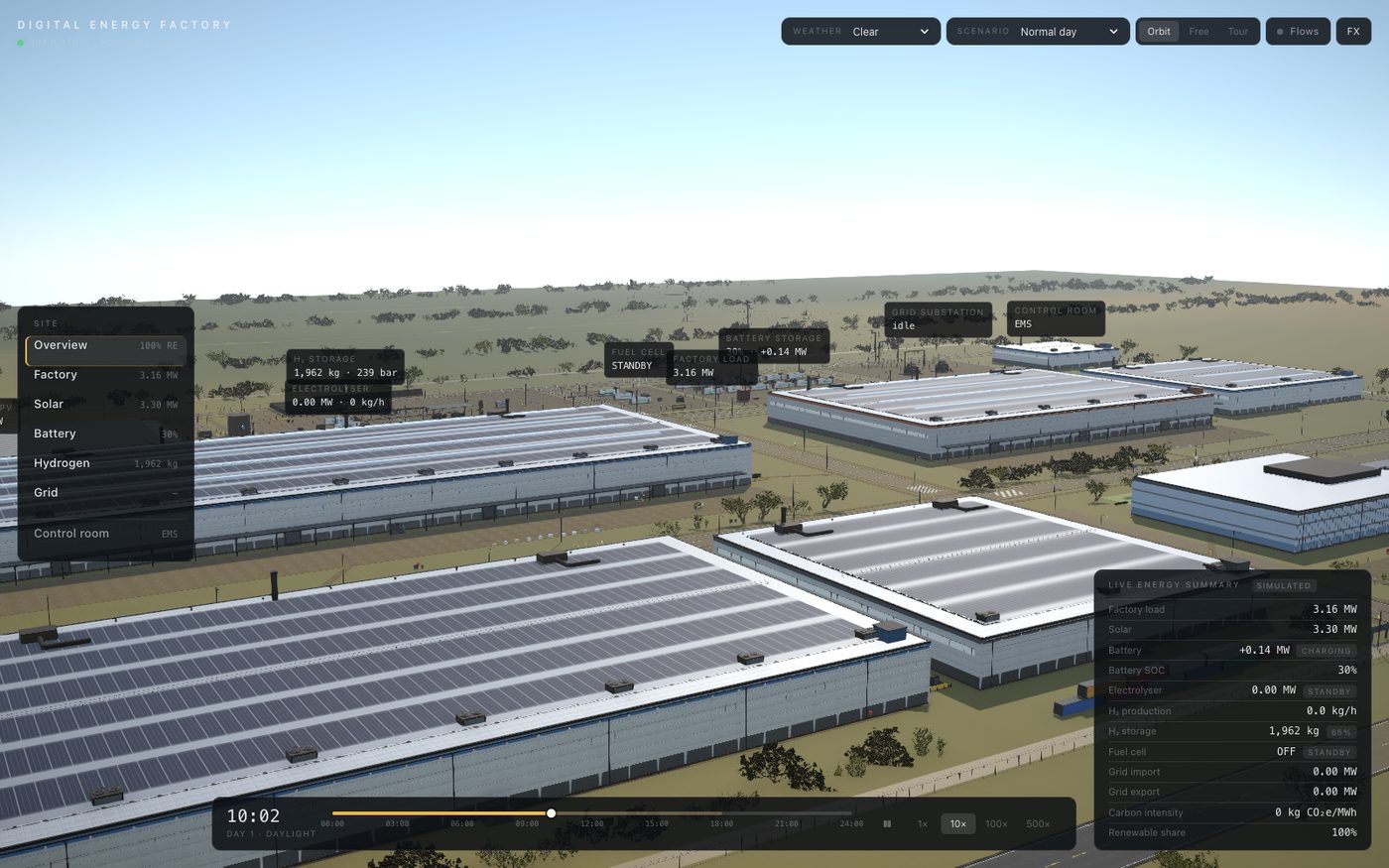
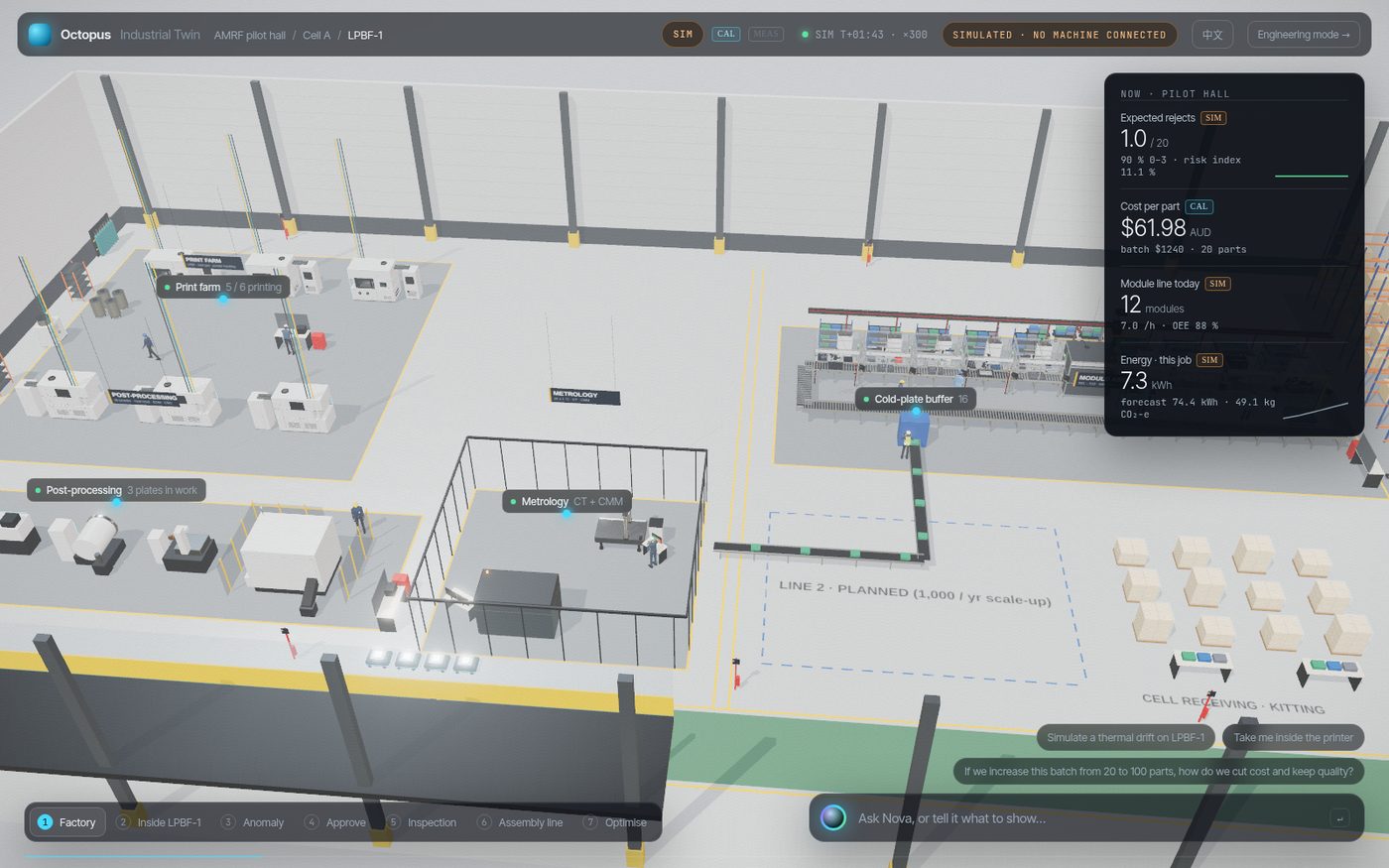
What happens if we run it this way? A process simulation runs in step with the system; scenarios and control decisions feed back. The HVAC tower, the energy factory, the warehouse and the restaurant group live here. The key discipline is the baseline twin: run the old strategy and the new one on the same inputs and report the difference.
Generation 4 — 4D causal twin
What changed, when, why — and how does that propagate into every possible future? Time becomes a first-class dimension:
- observed history is immutable;
- the present is an estimate;
- futures are predicted with uncertainty and can branch from any moment while sharing the same past;
- causality is derived from trajectory differences, not scripted.
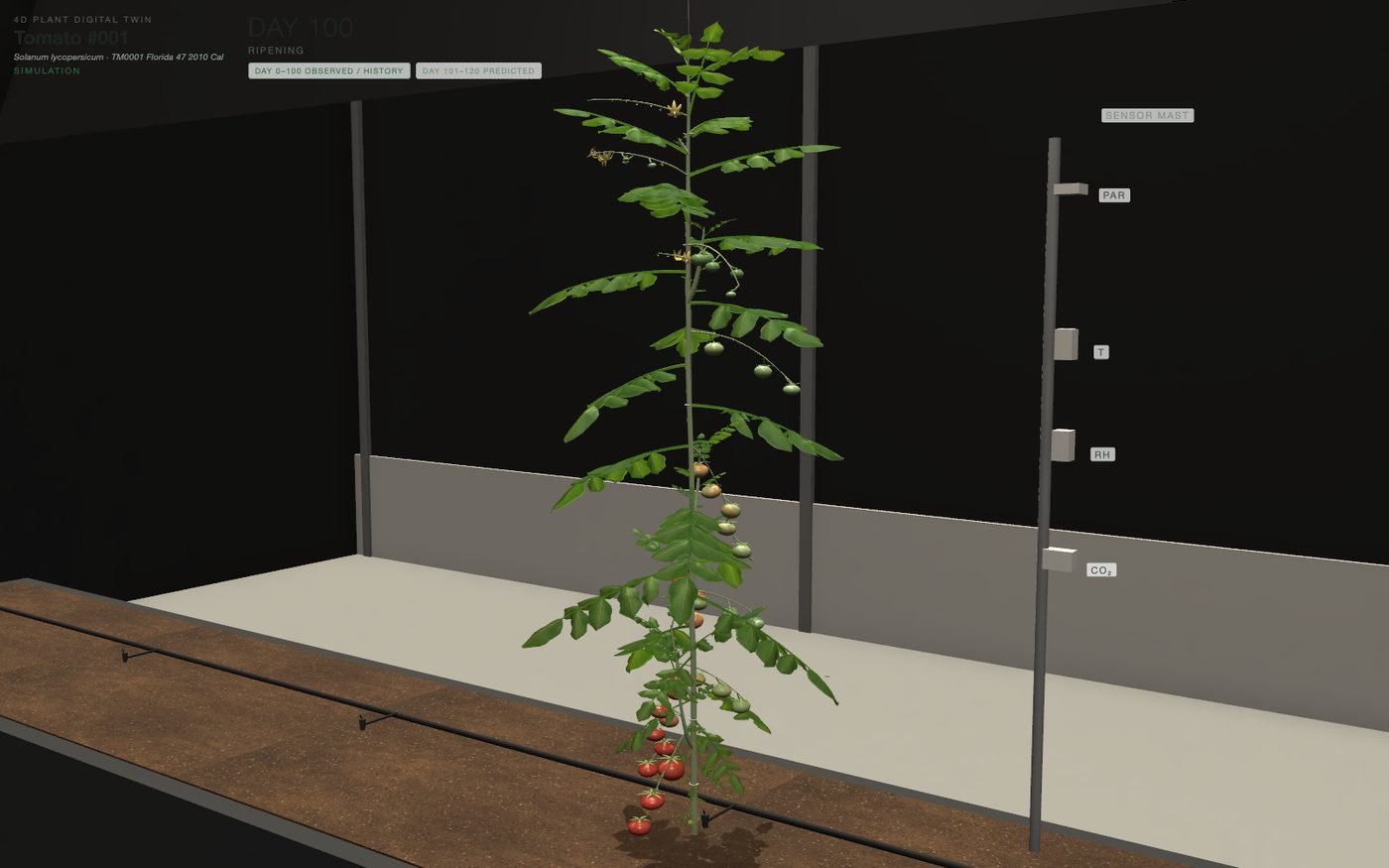
The 4D plant twin and the midstream pipeline twin are our generation-4 work. Change the irrigation on day 45, and the plant's future is recomputed while its past stays frozen; ask "why is this leaf smaller?" and the answer is a chain of measurable differences between two futures.
Why it matters for buyers
Ask any twin vendor which generation the product reaches for your questions. A beautiful model that cannot run a baseline cannot prove a saving; a simulation without immutable history cannot tell you what actually happened. The capability matrix on our research page is a good checklist.